QIDI Q3D 3D Printer
QIDI Q3D 3D Printer
QIDI Q3D 3D Printer
QIDI Q3D 3D Printer
Price Protection 30-Day Price Match
Guarantee 14-Day No Reason Return
Warranty 2-Year Coverage
Expert Support Lifetime Tech Guidance

QIDI Q3D 3D Printer

Prezzo normale€30,00
/

Tasse incluse. Spedizione calcolato al momento del pagamento.

QIDI Q3D — Materials without limits: dual nozzles, high-temp chamber, clog-free performance.

  • Build Volume: 260 × 260 × 260 mm
  • Dual-Head Printing: Multi-Material & Multi-Color
  • 70°C Gen-4 Heated Chamber with Dual Air Intake
  • 350°C Quick-Swap Nozzle
  • Next-Gen Eddy Current Sensor for First-Layer Precision
  • Precision Motion: X-Axis Linear Rails & Lightweight Design
  • Smart Controls: Full-Color Display & Status LEDs
🎁
Pre-order: Pay €30, Save €100
Reserve your Q3D with a fully refundable €30 presale payment and unlock a €100 discount.
Regular price €599
Presale discount −€100
Payment today €30
Balance due €499
Total payment (including presale payment) €529
Model
Option
Status

  • In magazzino, pronto per la spedizione
  • Ordinato in arretrato, spedizione a breve

Offerta di prevendita: Paga €30 per garantire un €100 credito verso QIDI Q3D (prezzo dell'articolo: €599). Questo non è il pagamento completo del prodotto.
Come funziona:
1. Paga €30 per bloccare il tuo €100 credito.
2. Una volta disponibile, ricevere un €499 Link per il pagamento del saldo tramite e-mail.
3. Completa il pagamento per organizzare la spedizione.
Rimborso garantito al 100%: Tuo €30 è completamente rimborsabile in qualsiasi momento, per qualsiasi motivo, sul metodo di pagamento originale, senza commissioni.
Note importanti: Solo credito virtuale; nessun indirizzo di spedizione o commissioni richiesti per l'acquisto del credito. Valido per QIDI Solo Q3D; non trasferibile, non divisibile e non convertibile in denaro. Si prega di pagare il saldo entro 7 giorni dalla notifica. Gli ordini non pagati riceveranno un sollecito e potranno essere annullati con un addebito completo. €30 Rimborso garantito in caso di mancata risposta. Vi informeremo di eventuali ritardi.
Tempi di spedizione stimati: Circa 3 mesi dopo l'ordine e il completamento del pagamento.

QIDI Q3D

Doppio ugello, semplice ed efficiente.

2 ugelli

Commutazione intelligente

Max 70°C

Riscaldamento della camera di quarta generazione

Fino a 350°C

Uscita potente dell'ugello principale

Più veloce del 40%

rispetto alla tradizionale stampa a due colori

Scopriamo insieme i punti salienti di Q3D

Solo per una stampa a doppio materiale più efficiente

<p>Controllo climatico dell'estrusore. Smart raffreddamento, interfaccia utente in tempo reale.</p>

Controllo climatico dell'estrusore. Smart raffreddamento, interfaccia utente in tempo reale.

Doppio ugello. Multimateriale reso semplice.
Riscaldamento della camera Gen-4 a 70°C
Design di raffreddamento a doppia aspirazione
Hardware di punta. Il sensore Eddy incontra le guide lineari.
Filtrazione dell'aria pura. Stampe pulite, respirazione sicura.

Zero scarti. Zero sprechi.

Supporto per doppio materiale e stampa con miscelazione dei colori

Grazie al sistema di ugelli doppi indipendenti, Q3D elimina la necessità di spurgare il filamento e gli sprechi di materiale. Passa istantaneamente da un colore all'altro o da un materiale di supporto all'altro, riducendo i tempi di stampa multimateriale di quasi la metà.

<p>Supporto per doppio materiale e stampa con miscelazione dei colori</p>

Perfezione in ogni interruttore.

Progettata con una testina di stampa leggera, la Q3D commuta senza soluzione di continuità tra due estrusori con una stabilità a prova di bomba, garantendo una stampa fluida e affidabile e una finitura superficiale impeccabile ogni volta.

Pulito, impeccabile, sempre.

Rimozione del supporto, problema risolto.

Niente più difficoltà nella rimozione dei supporti. Tutto si separa in modo netto e lascia una finitura impeccabile.

<p><strong>Rimozione del supporto, problema risolto.</strong></p>

Telaio del drone

Materiale risparmiato

41%

meno materiale

Doppio ugello convenzionale
Q3D

Tempo di stampa risparmiato

52%

più veloce

Doppio ugello convenzionale
Q3D

Rimozione in un'unica trazione senza lasciare cicatrici superficiali.

Stacco netto. Finitura impeccabile.

Stampati tramite un secondo ugello dedicato, i supporti si staccano facilmente a mano, lasciando la parte inferiore così liscia e definita che vorrete mostrarla a tutti.

<p>Stacco netto. Finitura impeccabile.</p>

Progettato in funzione della temperatura.

La gestione termica di livello industriale sblocca l'intero spettro dei materiali. Senza limiti.

Controllo climatico dell'estrusore

Aria fredda, direttamente alla fonte.

Un apposito canale di raffreddamento convoglia aria fredda direttamente sull'estrusore. Le temperature si abbassano rapidamente e il rischio di intasamento si riduce fino al 90%. Guarda il processo in azione, in diretta, direttamente sull'interfaccia utente.

<p>Aria fredda, direttamente alla fonte.</p>

Stabilità industriale senza deformazioni o crepe.

Riscaldamento della camera di quarta generazione fino a 70 °C

Calore della camera stabile e uniforme — da tutti i giorni PLA Realizzato in nylon tecnico resistente alle alte temperature. Minore deformazione. Nessuna fessurazione degli strati.

<p>Riscaldamento della camera di quarta generazione fino a 70 °C</p>

Raffreddamento ad alta velocità per sporgenze e ponti impeccabili.

Design con doppia presa d'aria esterna.

Le doppie prese d'aria esterne aspirano aria fresca e pulita per solidificare istantaneamente il filamento, garantendo sporgenze precise e ponti piatti su qualsiasi geometria.

<p>Design con doppia presa d'aria esterna.</p>

Hardware di punta. Qualità di stampa ineguagliabile.

Grazie alla combinazione di un sensore a vortice di nuova generazione, guide lineari di precisione e una testina di stampa a doppio estrusore ultraleggera, Q3D offre una qualità di stampa impeccabile e costante, dal primo strato alla superficie superiore.

Stabilità assoluta in ogni condizione.

Sensore a correnti parassite di nuova generazione

Il nostro algoritmo di calibrazione aggiornato mappa automaticamente il piano di lavoro, garantendo un primo strato impeccabile senza margini di errore in qualsiasi condizione.

<p>Sensore a correnti parassite di nuova generazione</p>

La perfezione inizia dal primo strato

Ogni linea si stende in modo uniforme e preciso, creando una base solidissima per modelli complessi.

Il movimento di precisione incontra l'esecuzione macro.

Le guide lineari di livello industriale, abbinate alla compensazione attiva delle vibrazioni, eliminano la risonanza meccanica alle alte velocità.

— producendo angoli affilati come rasoi e pareti verticali lisce come uno specchio.

<p>Il movimento di precisione incontra l'esecuzione macro.</p>
Guide lineari dell'asse X
<p>Il movimento di precisione incontra l'esecuzione macro.</p>
Cinghia personalizzata di ultima generazione per 1.5GT

Qualità superficiale uniforme dal basso verso l'alto.

Testina portautensili a doppio hotend ultraleggera

La massa mobile ridotta al minimo diminuisce l'inerzia durante i rapidi cambi di direzione, garantendo un'estrusione costante e una texture superficiale uniforme dal primo millimetro fino alla cima finale.

<p>Testina portautensili a doppio hotend ultraleggera</p>

Sostituzioni senza attrezzi. Potenza ad alta temperatura.

Hotend di punta a 350°C con sistema di cambio rapido

Sostituisci gli ugelli senza attrezzi in pochi secondi, raggiungendo temperature fino a 350 °C per stampare senza sforzo filamenti tecnici ad alta temperatura.

<p>Hotend di punta a 350°C con sistema di cambio rapido</p>

IA di nuova generazione e Smart Ecosistema hardware

Automazione intelligente ed esperienza migliorata

Dalla livellazione automatica microscopica al rilevamento di anomalie in tempo reale tramite intelligenza artificiale, l'automazione intelligente garantisce un flusso di lavoro fluido e senza problemi.

Stato in tempo reale a colpo d'occhio.

Display a colori e Smart LED di stato

Naviga senza sforzo su un nitido touchscreen a colori, mentre la barra di stato LED intelligente integrata comunica lo stato della macchina in tutta la stanza, dalla modalità di sospensione e dalla preparazione alla stampa fino all'avanzamento della stampa in tempo reale.

Alimentato da QIDl Box

Potenza senza spazzole. Velocità multicolore.

Azionato da un motore brushless di livello industriale, QIDI Box Fornisce una potente e elevata coppia in uscita, garantendo un'alimentazione del filamento fluida e senza slittamenti su ogni bobina.

Il sistema di filtrazione dell'aria a 3 strati cattura il 99,5% delle particelle.

Progettato per la salute e la sicurezza domestica

La circolazione attiva dell'aria fa passare il fluido attraverso una cartuccia filtrante a 3 strati ad alta efficienza, che cattura il 99,5% di polvere, particelle ultrafini e odori, mantenendo l'aria interna fresca e salubre.

Stampa nel tuo studio mentre i tuoi animali domestici dormono sonni tranquilli nelle vicinanze.

Un'esperienza domestica silenziosissima

Il controllo del movimento con smorzamento acustico e le ventole silenziose mantengono la stampa straordinariamente silenziosa, così la tua macchina funziona tranquillamente nel tuo studio mentre animali domestici e familiari riposano indisturbati.

<p>Un'esperienza domestica silenziosissima</p>

Oltre la sicurezza. Pensato per soddisfare le tue esigenze.

Protezione a prova di bomba e design ergonomico studiato nei minimi dettagli. Ogni particolare di Q3D è progettato per offrire tranquillità e un utilizzo quotidiano senza sforzo.

Monitoraggio termico intelligente
Architettura della camera ignifuga
Pavimento della camera piatto e facile da pulire
Maniglie di trasporto ergonomiche incassate
Telaio rigido interamente in metallo

Perché Q3D?

Più che una semplice stampante: è il modello di punta a doppio ugello, progettato per una perfezione senza sforzo.

Stampa multimateriale a zero sprechi, gestione termica attiva a 70 °C e automazione intelligente: tutto progettato per dare vita alle tue idee più audaci.

Dal laboratorio al tuo salotto: puoi usarlo ovunque.

Per gli amanti del fai da te, le famiglie, i designer e voi!

What's in the box

What's in the box - desktop
What's in the box - mobile

QIDI Q3D Technical Specifications

Print Size (W*D*H):Main Nozzle: 260*260*260 mm³
Auxiliary Nozzle: 240*260*255 mm³
Dual Nozzle: 240*260*255 mm³
Total Volume: 260*260*260 mm³

Printer Dimensions:405*475*441 mm

Package Dimensions:500*540*580 mm

Gross Weight:35 kg
Net Weight:29 kg Print Head Temperature:≤ 350℃

Printing Plate:Double-sided PEI Magnetic Build Plate

Hot Bed Temperature:≤ 120℃

Max Speed of Tool Head:600mm/s

Acceleration:≤20000mm/s^2
XY Structure:CoreXY, 7mm Width 1.5GT Belt X Axis:High Hardness Linear Guide Rail
Z Axis:10mm Linear Shafts and Screws Printing Platform:Aluminum Plate Silicone Heated Bed
Status RGB LED
Nozzle:Quick-Swap Bimetal Nozzle Nozzle Diameter:0.4mm (0.2/0.6/0.8mm Optional)
Extruder:Direct Extruder, Hardened Steel Dual Gears, Extruder Thermal Monitor (ETM)
Supported Filament (Main Hotend):PLA, ABS, ASA, PETG, TPU, PA, PC, Carbon/Glass Fiber Reinforced Polymer, etc.
Filament Diameter:1.75mm Multi-Color Printing:Compatible with QIDI Box (Multi-color)
Air filter:3-in-1 Air Filter: G3 Pre-Filter + H12 HEPA + Coconut Shell Activated Carbon
Chamber Temperature:Gen-4 Up to 70°C, Independent Chamber Heating
Automatic Leveling:Eddy Sensor Integrated into the Hotend Filament Detection:Run Out Sensor, and Tangle Detection (QIDI BOX required)
AI Camera Detection:Yes Auxiliary Part Cooling Fan:4-Pin PWM Fan with RPM Feedback
Hot End Cooling Fan:4-Pin PWM Fan with RPM Feedback Model Cooling Fan:4-Pin PWM Fan with RPM Feedback
Power Loss Recovery:Yes Input Shaping:Yes
Voltage:110V / 220–240V AC, 50/60Hz (region-specific models available) Rated Power:220 VAC: 1200W+280W (Chamber Heating)
110 VAC: 300W+280W (Chamber Heating)
Steady-State Power (25°C Ambient):
PLA: 190W, ABS: 500W
Camera:HD Camera, Timelapse Supported
Storage:64G EMMC and USB2.0 Flash Drive
Connectivity:Wi-Fi, USB Display Screen:4Inch 800*480 Touch Screen
Slicer:QIDI Studio and other third-party software, such as PrusaSlicer, Orca etc. (certain advanced features may not be supported) File Formats for Slicing:STL, OBJ, 3MF, STEP (.stp/.step), etc.

QIDI Q3D TDS

Download
Tips:
  • For better print quality, please use the QIDI official filaments.
  • The printer’s voltage specifications vary by sales region. Before use, please check the label next to the power socket on the printer to ensure the supplied voltage matches the indicated voltage.
  • To ensure the heatbed quickly reaches the needed temperature, the printer will maintain maximum power for about 3-5 minutes.
  • Special area: Lower-left 5×17 mm area and Lower-Right 11×17 mm area are non-printable by default. Remove cutter for full-plate printing.

Frequently Asked Questions For QIDI Q3D

What are the main differences between QIDI Q3D and QIDI Q2?

The QIDI Q3D upgrades nearly every subsystem over the Q2 — true dual-material printing is the headline.

  • Auxiliary nozzle — a second hotend for true dual-material printing, a second color, or soluble supports.
  • 260 x 260 x 260 mm build volume — the same total volume is available for dual-nozzle printing.
  • Gen-4 70 C heated chamber — up from the Q2's Gen-2 65 C, better for warp-prone engineering filaments.
  • Eddy sensor auto leveling — replaces the Q2's loadcell sensor for automatic bed leveling.
  • Extruder Thermal Monitor (ETM) — Continuously tracks extruder temperature to prevent clogs.
  • 64 GB eMMC storage — double the Q2's 32 GB.
  • Cortex-M7 motion controller — upgraded from the Q2's Cortex-M4.
  • Dual-band 2.4/5 GHz Wi-Fi (802.11ac) and a 4-inch 800 x 480 touchscreen.

Bottom line: If you need two materials in one print or want to tackle ABS, PC and fiber-reinforced filaments, the Q3D is the clearer choice over the Q2.

What is the QIDI Q3D 3D printer?
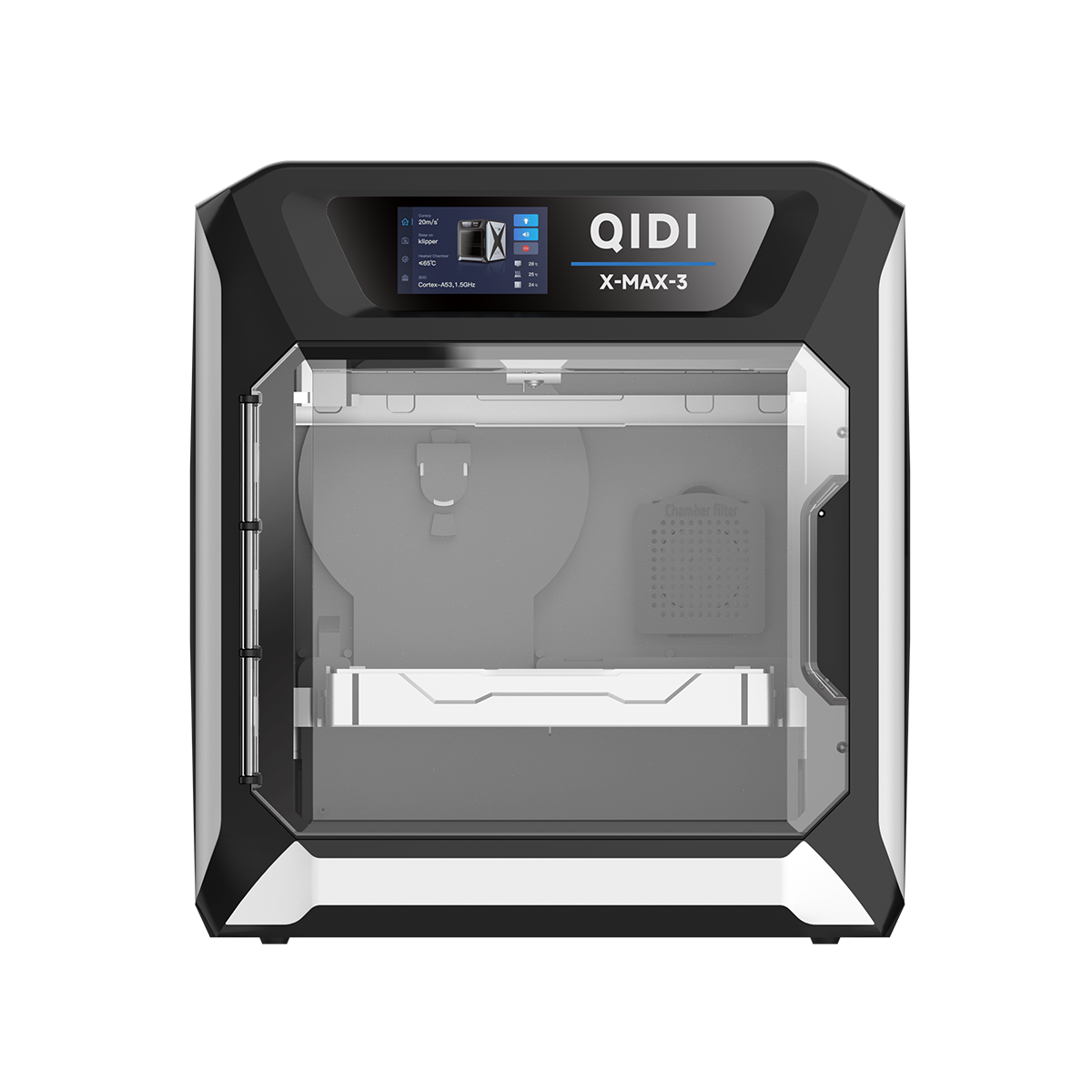
The QIDI Q3D is a high speed CoreXY 3D printer built for dual-nozzle, multi-material printing. It combines a 260 x 260 x 260 mm main build volume, a Gen-4 independently heated chamber up to 70 C, a 350 C ceramic hotend, and an auxiliary nozzle for a second material or soluble supports high quality prints. It is designed for PLA, ABS, ASA, PA, PC and carbon/glass-fiber reinforced filaments.
What is the maximum print size of the QIDI Q3D?
Main nozzle printing: 260 x 260 x 260 mm. Auxiliary nozzle printing and dual-nozzle printing: 240 x 260 x 255 mm. Total volume for two nozzles: 260 x 260 x 260 mm. The printer itself measures 405 x 475 x 441 mm and weighs 29 kg net.
How fast is the QIDI Q3D 3D printer?
The tool head reaches a maximum movement speed of 600 mm/s, with a maximum printing acceleration of 20,000 mm/s squared. Input Shaping is supported to reduce ringing and keep surfaces clean at high speeds. The hotend uses ceramic plate heating and reaches 220 C from 30 C in about 40 seconds.
Does the QIDI Q3D support dual-color or multi-material printing?
Yes. The Q3D uses a main hotend plus an auxiliary hotend, so two different filaments can be printed in one job. The auxiliary hotend supports PLA (excluding PLA Aero), PETG, ABS, ASA, TPU 64D, PA, PC, PVA and support filaments including Support for PLA, PLA/PETG, ABS and PA/PET. The dual-nozzle printing area is 240 x 260 x 255 mm. For best quality, print PLA Silk, PETG-CF, ASA-CF, PA6-CF, TPU 64D and PA/PET support with the main hotend.
What are the maximum hotend and heated bed temperatures of Q3D?
The hotend reaches up to 350 C and the heated bed up to 120 C. The hotend uses ceramic plate heating with a multi-metal structure and a thermocouple for accurate temperature measurement. The build plate is a double-sided PEI magnetic flexible plate on an aluminum silicone heated bed.
Why does the 70 C heated chamber matter, and is Q3D better than Q2 for engineering filaments?
The QIDI Q3D features Gen-4 independent chamber heating up to 70 C, compared with 65 C on the Q2. A hotter chamber keeps large ABS, ASA, PC and PA parts from warping and cracking and improves layer adhesion. The chamber uses a 4-pin PWM circulation fan with RPM feedback. Together with a 350 C hotend and a 3-in-1 air filter, this makes the Q3D well suited to engineering and fiber-reinforced filaments.
Can I change the nozzle on the QIDI Q3D?
Yes. The Q3D uses quick-swap bimetal nozzles. A 0.4 mm nozzle is standard, and 0.2 mm, 0.6 mm and 0.8 mm nozzles are optional. The main extruder is a direct drive unit with hardened steel dual gears and a 5.9:1 transmission ratio, and a filament cutter is built in.
What sensors and safety features does the QIDI Q3D have?
The Q3D includes an Eddy sensor integrated into the hotend for automatic leveling, a filament run-out sensor, Extruder Thermal Monitor (ETM), filament tangle detection (requires QIDI BOX), Input Shaping, power-loss recovery, AI camera detection, and RGB status lighting on the heated bed.
Does the QIDI Q3D work with QIDI BOX?
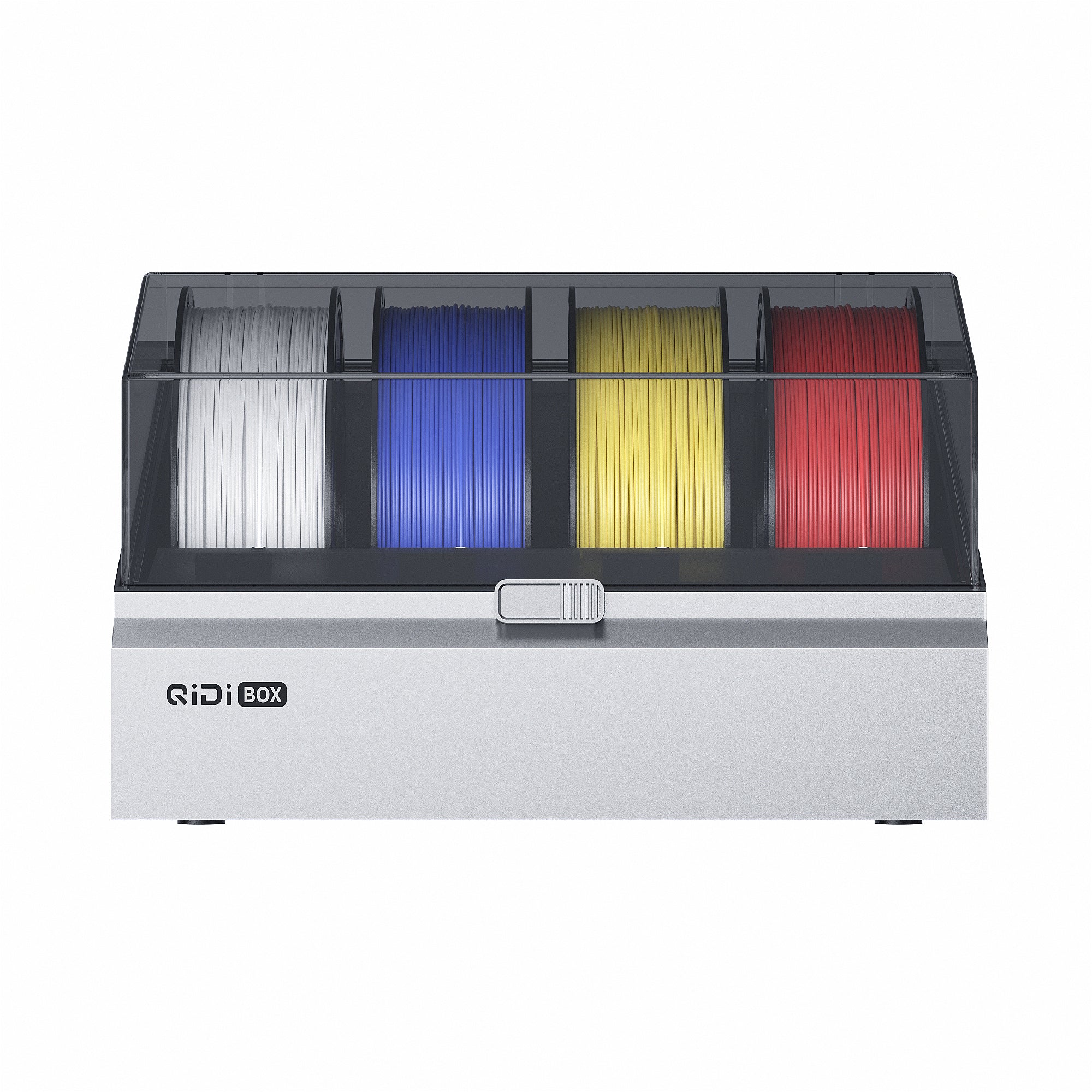
The Q3D supports QIDI BOX for filament tangle detection. Multi-material printing is handled by its built-in dual-nozzle system and can add up to 4 external QIDI BOXs.
Which filaments can the QIDI Q3D print?
The main hotend supports PLA, ABS, ASA, PETG, TPU, PA, PC and carbon/glass-fiber reinforced polymers. The auxiliary hotend supports PLA (excluding PLA Aero), PETG, ABS, ASA, TPU 64D, PA, PC, PVA, and support materials for PLA/PETG, ABS, PA/PET and PET. QIDI recommends official filaments for the best print quality.
Can the QIDI Q3D print supports?
Yes. With the auxiliary nozzle you can print PVA or dedicated support filaments such as Support for PLA/PETG, Support for ABS and Support for PA/PET while the main nozzle prints the model. This dual-extruder setup is ideal for complex geometries and overhangs that are difficult with a single nozzle.
Does the QIDI Q3D have air filtration?
Yes. It has a 3-in-1 air filter combining a G3 pre-filter, an H12 HEPA filter and coconut-shell activated carbon. Working with the chamber circulation fan, it reduces fumes and ultrafine particles when printing ABS, ASA or PC.
Does the QIDI Q3D have a camera and AI print monitoring?
Yes. The Q3D includes an HD camera with time-lapse support and AI camera detection for monitoring prints. You can control and check the printer from the 4-inch 800 x 480 touchscreen, the mobile app or the PC application.
How do I connect the QIDI Q3D to Wi-Fi, phone or PC?
The Q3D supports dual-band Wi-Fi (2.4 GHz and 5 GHz, IEEE 802.11a/b/g/n/ac) and USB, and works with a USB 2.0 flash drive. Control interfaces include the touchscreen, mobile app and PC application. Storage is 64 GB eMMC plus USB flash drive, so you can print files without a computer.
Which slicers and file formats does the QIDI Q3D support?
The Q3D works with QIDI Studio and third-party slicers such as PrusaSlicer and Orca, although some advanced features may not be supported. Supported file formats include STL, OBJ, 3MF and STEP (.stp/.step). Supported operating systems are Windows, macOS and Linux.
Are there non-printable areas on the QIDI Q3D build plate?
By default, the lower-left 5 x 17 mm area and the lower-right 11 x 17 mm area are non-printable because of the toolhead filament cutter. Remove the cutter if you need full-plate printing. The plate is a double-sided PEI magnetic flexible build plate for easy part removal.
How long does the QIDI Q3D take to heat up and how much power does it use?
The ceramic hotend heats from 30 C to 220 C in about 40 seconds. To bring the heatbed up quickly, the printer runs at maximum power for about 3-5 minutes. Steady-state power at 25 C ambient is about 190 W for PLA and 500 W for ABS. The 220 V model is rated 1200 W + 280 W for chamber heating; the 110 V model is 300 W + 280 W for chamber heating.
Does the QIDI Q3D support an extruder cooler?
An extruder cooler is optional on the Q3D and requires the Polar Cooler accessory. It is recommended when printing large size model, high-temperature or fiber-reinforced materials for long sessions.
Is the QIDI Q3D good for beginners and for home or office use?
Yes. Automatic leveling with the Eddy sensor, Input Shaping, power-loss recovery, filament run-out detection, AI camera monitoring and a 4-inch touchscreen make daily printing straightforward. The 70 C heated chamber, 3-in-1 air filter and sealed-printing compatibility also make it practical for home or office use with engineering filaments.
What voltage does the QIDI Q3D use?
The Q3D is supplied in region-specific models: 110 V or 220-240 V AC, 50/60 Hz. Always check the label next to the power socket on the printer before use to confirm the supplied voltage matches. The printer will maintain maximum power for about 3-5 minutes to heat the bed quickly.